Daniel John Taylor, O.C. has been awarded
the inaugural National Medal for Music.
The announcement comes on the heels of his induction as an Officer of the Order of Canada in December 2022.
Established in 2023, the distinction is Canada’s highest honor in the Arts. The official press statement stated:
"it will be awarded every year to two outstanding leaders who have had a major and positive influence on the cultural
life and climate of the nation. The award recognizes exceptional achievement, dedication to the community and service to the nation.
Those honoured have made remarkable contributions that have lifted the spirits and enriched the lives of others,
and have made a compassionate, meaningful difference to this country through acts of kindness, courage and heartfelt conviction."
The other recipient this year is political icon Ed Broadbent.
Daniel Taylor Appointed Officer of the Order of Canada
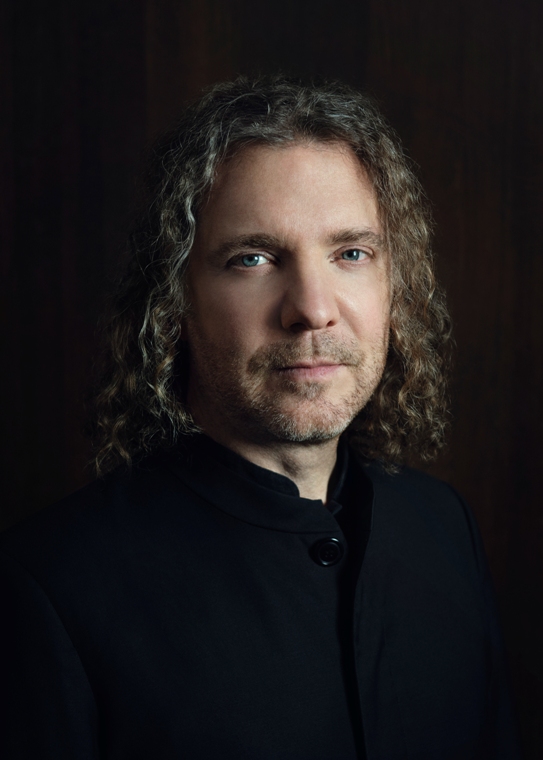
Countertenor & Conductor Recognized As One Of Canada’s
Most Celebrated Cultural Ambassadors
December 30, 2020
The office of the Governor General of Canada announced today that Daniel Taylor, countertenor, conductor, recording artist,
and Professor of Opera, Early Music and Voice, has been appointed as an Officer of the Order of Canada.
One of the our highest civilian honours, the Order recognizes outstanding citizens for distinguished service in their fields
and extraordinary contributions to the country, whose service shapes our society, whose innovations ignite our imaginations
and whose compassion unites our communities.
The Official Citation from the Office of the Governor General of Canada :
With a voice that draws global applause, countertenor Daniel Taylor is one of our country’s most celebrated cultural ambassadors.
Distinguishing himself with moving performances and known for his warmth and humour, he has appeared on the world’s greatest stages
with prestigious orchestras, composers and artists. Serving as founding artistic director and conductor of the Theatre of Early Music,
and of the critically-acclaimed ensemble The Trinity Choir, he is highly regarded as a devoted university professor and mentor to the
next generation of singers.
Taylor joins an esteemed list of leaders named over the past 50 years in politics and science including the Right Honourable Ed Broadbent,
the Nobel prize laureate John Polanyi, author Margaret Atwood, sports icons Wayne Gretzky and Terry Fox, as well as musicians including Joni Mitchell,
Celine Dion, and Oscar Peterson.
For the full New Year’s Honours listing from the Office of The Governor General of Canada,
click here
"I am honoured to have my service thus far recognized and I am humbled to be in the company of so many dedicated and truly remarkable individuals,"
says Taylor. In this pandemic year, Taylor is especially gratified of the recognition of music-making and its "values of beauty and vulnerability,
stillness and honesty."
During this year of crisis, Taylor has been providing solace through his projects that connect people online, including the virtual choir, One World Baroque,
while also raising University scholarship funds through outdoor concerts. "The pandemic has devastated the lives of many artists," comments Taylor,
"When we feel like there is little hope, music can help lift each other up and bring us together. In a country as fortunate and glorious as Canada,
we need now to have a guaranteed basic income for all needing support in our society. We also have to accept that this virus has laid bare the historic
underlying inequalities that exist in our communities, especially suffered by racialized groups."
As a Professor at the University of Toronto, Taylor is known for his advocacy for social justice, within and outside the University, including his work for the
disabled. He accepts this honour as a call to action for artists and teachers: "Beauty can be seen through many different lenses and we must not insist that
there is only one way to look at music or, indeed, to look at life. We are here to be in the meaningful service of others."
Daniel John Taylor, O.C. is praised by the critics and audience alike as "Canada’s star countertenor".
Since his early career debuts at New York’s Metropolitan Opera, the Glyndebourne Festival, and the Rome Opera, his voice has been hailed as an
"unwavering spirit carried aloft above the tumult of earthly existence" (The Toronto Star). The Times says the
"beauty of his voice will stop you in your tracks," while The Guardian calls him "part angel, part man."
Additional operatic engagements have included the San Francisco Opera, the Welsh Opera, Opéra de Montréal, and the Canadian Opera Company.
Taylor has performed with the Edinburgh Festival, the New York Philharmonic, Cleveland Orchestra, Israel Philharmonic, the symphonies of Madrid,
Dallas and Toronto, with Tafelmusik and Les Violons du Roy, and returned to Teatro Colon in Buenos Aires last fall. He has been heard in recital
at the BBC Proms and at Wigmore Hall in London; at Amsterdam’s Concertgebouw and Zürich’s Tonhalle; in China’s Forbidden City;
at Notre Dame Cathedral in Paris; and at Carnegie Hall. Additional performances include a world tour with Sir John Eliot Gardiner and the Monteverdi Choir
for the Bach Cantata Pilgrimage; projects with actors Ralph Fiennes, Jeremy Irons, Megan Follows, Martha Henry, and Chris Noth; and Ryuichi Sakamoto’s opera,
Life, which was narrated by the Dalai Lama.
Canada’s most prolific recording artist, Taylor may be heard on over 120 albums and in films on labels including DG Archiv, Warner, DECCA and SONY.
Taylor’s productions have been recognized with numerous awards including a GRAMMY Award, Diapason d’Or, BBC Music Awards, JUNO Award,
and Quebec’s ADISQ, among many others. He also appears on Cirque du Soleil recordings of Totem and Avatar.
Taylor is Founder and Artistic Director of two ensembles: The Theatre of Early Music and The Trinity Choir. A gifted choral conductor and sought-after teacher.
In recent years, Taylor traveled to Africa as well as to Brazil, Cuba and to China to offer workshops, masterclasses and recitals.
Daniel Taylor is Director of the Historical Performance Area of the Faculty of Music, University of Toronto. Opera Canada praised Taylor’s
leadership in his teaching role: "Daniel Taylor has created one of Canada’s leading early music programs by marrying
tradition and history with artistic freedom. Freedom of exploration, and more crucially freedom from judgement, has been a central pillar of Daniel Taylor’s
educational philosophy."
Taylor completed his undergraduate study at McGill University, graduate work at the Université de Montréal with advanced studies at the
Royal Academy of Music in London and with leading exponents in the area of early music. He is the recipient of the Queen’s Jubilee Medal for Music.
Daniel Taylor lives in Toronto with his wife and their young son.
Media Contact: Shira Gilbert shira@shiragilbertPR.com
www.shiragilbertPR.com
Tel: 514.585.386
Daniel Taylor soloist on JUNO award winning Ottawa Bach Choir recording
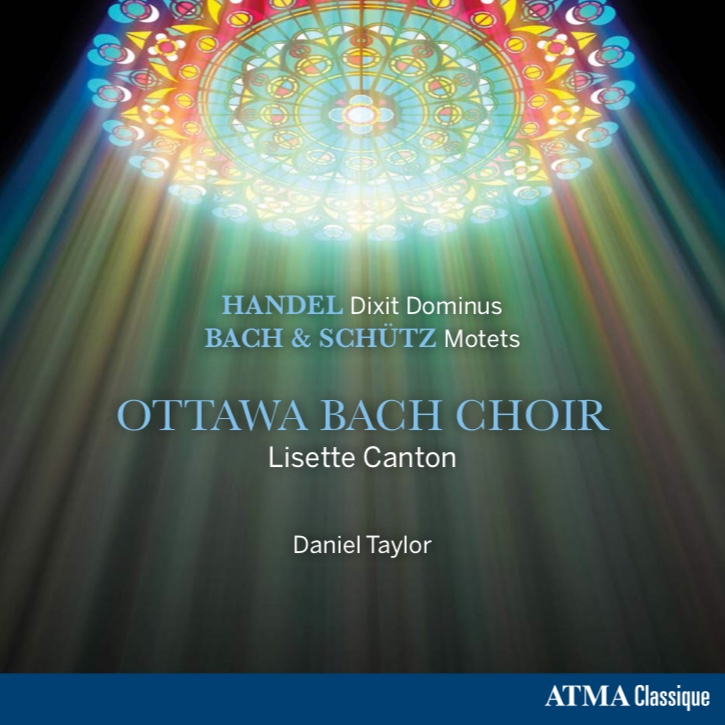
The Ottawa Bach Choir (OBC) has won a JUNO 2020 Award for its recording,
Handel: Dixit Dominus; Bach & Schütz: Motets
in the category Classical Album of the Year: Vocal or Choral.
Featuring soloists, countertenor Daniel Taylor, sopranos Kathleen Radke and Kayla Ruiz, accompanied by the
award- winning Ensemble Caprice baroque orchestra, and organist, Matthew Larkin.
The recording was released on the ATMA Classique label and exclaimed as :
"staggering and movingly performed" (Gramophone Magazine),
"among the very best" (American Record Guide)
and "awe-inspiring" (The WholeNote).
"Daniel Taylor guests for the alto aria Virgam virtutis in which the interplay
between his golden voice and the continuo instruments is sublime." (The WholeNote March 2019)
Daniel Taylor writes:
It's a JUNO win! I am so proud to be a soloist on this disc and to share Handel's beautiful music with our listeners.
We miss you so much!
Congrats to :
Ottawa Bach Choir, Conductor Lisette Canton,
my student Soprano Kayla Ruiz
Producer Carl Talbot
Ensemble Caprice Baroque Orchestra
and all of the wonderful musicians.
Daniel Taylor ends visit to Kingston
with Glorious Final Concert
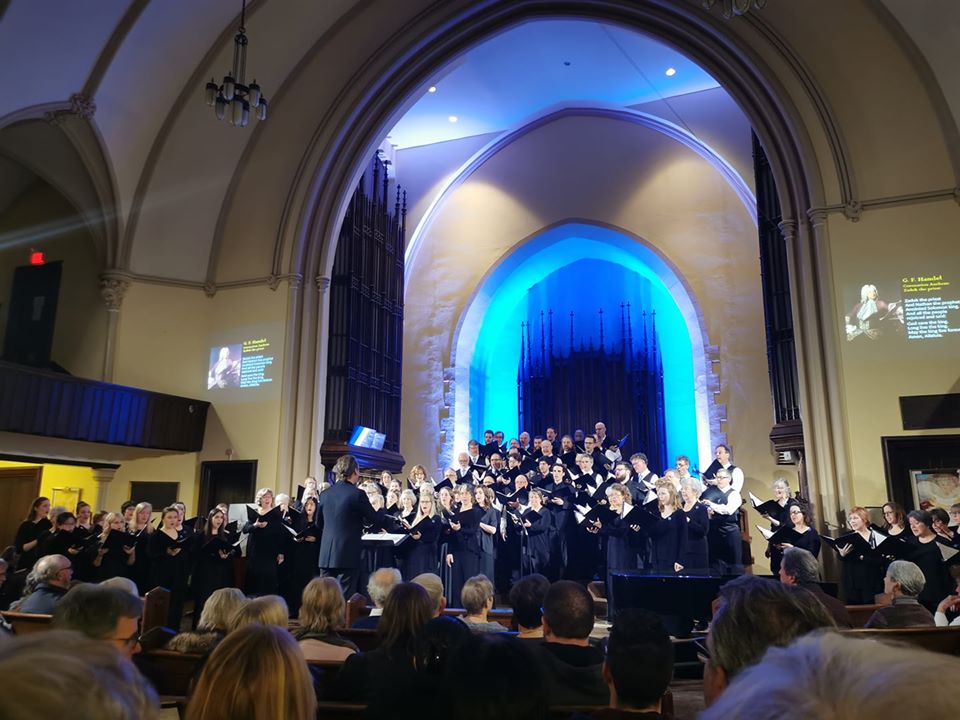
Thanks to Daniel Taylor and the choir of the Theatre of Early Music for joining Cantabile Choirs of Kingston last weekend for 'Spirit and Soul'.
Exceptional singing and four wonderful days of inspired coaching from Dan.
What an unexpected pleasure and privilege to hear the solo from Daniel at the beginning of the concert.
Bravi tutti!
Geoffrey Sirett, Cantabile Assistant Director
March 9th 2020
An Epic Portrayal - Daniel Taylor In Gluck's Orfeo
At The Teatro Colon In Buenos Aires
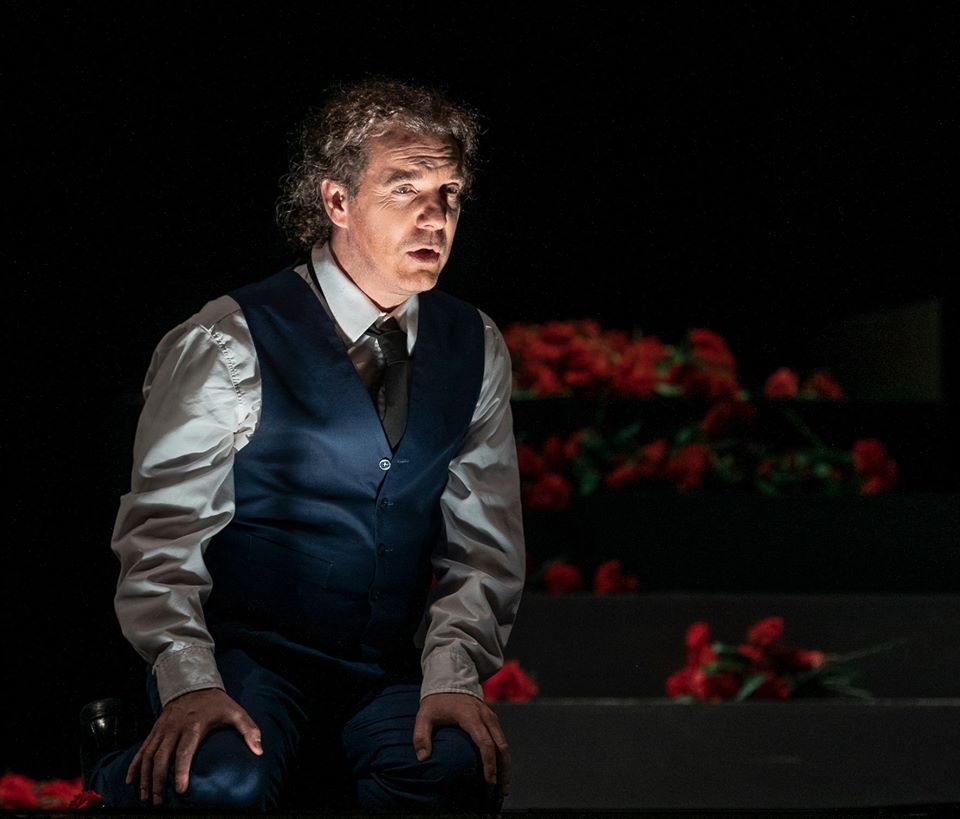
(© Prensa Teatro Colon / Arnaldo Colombaroli)
"An epic portrayal by the Canadian countertenor Daniel Taylor...
the elegance of the timbre, pure and crystalline..full, clear and powerful.
The vocal intentions are nuanced with modesty and sincerity in phase with the dramatic play.
The luminous silver-blue voice of the countertenor... warmly applauded."
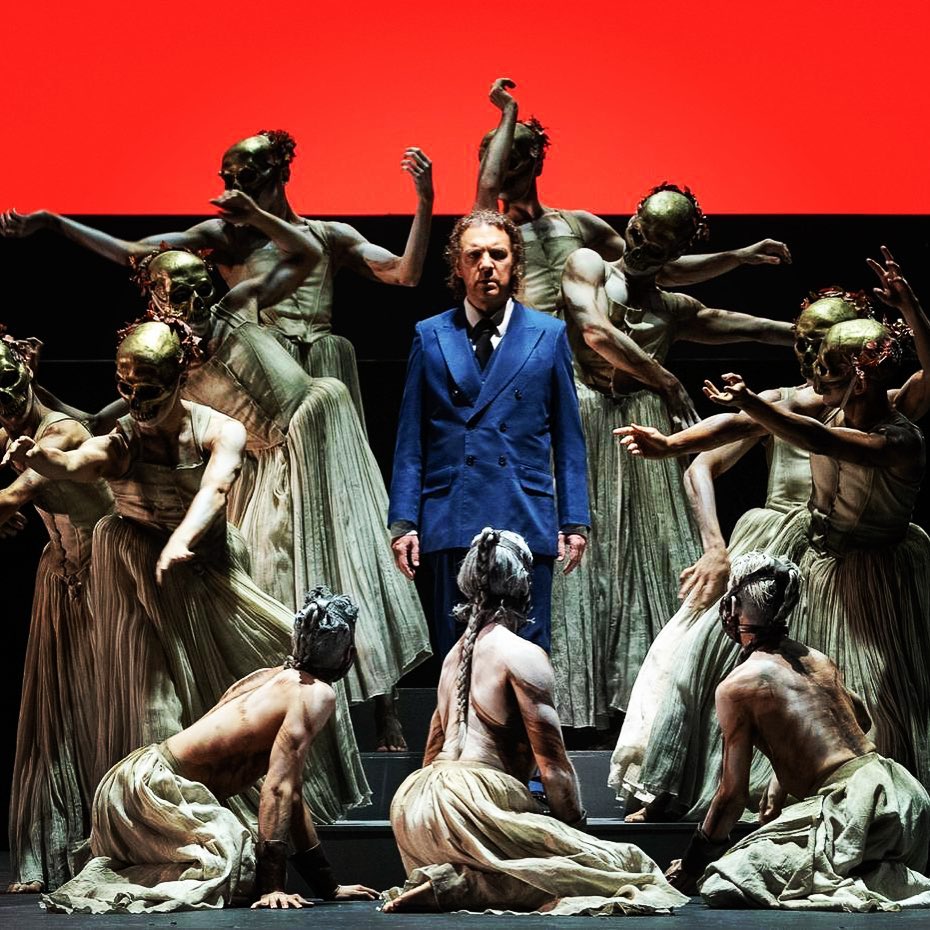
(© Prensa Teatro Colon / Maximo Parpagnoli)
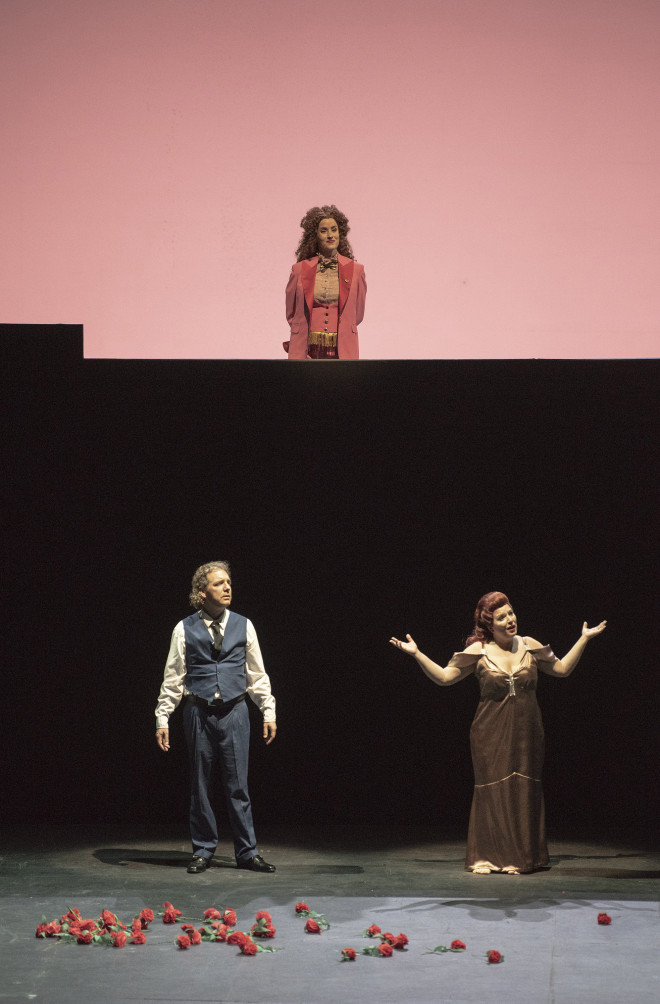
(© Prensa Teatro Colon / Arnaldo Colombaroli)
"Ellen McAteer, Daniel Taylor’s compatriot, gets the public’s attention and favors by interpreting Amore,
a colorful character in which the soprano invests fully, both vocally and in theatrical play.
Her voice is festive, full-bodied, bubbly and floral,....."
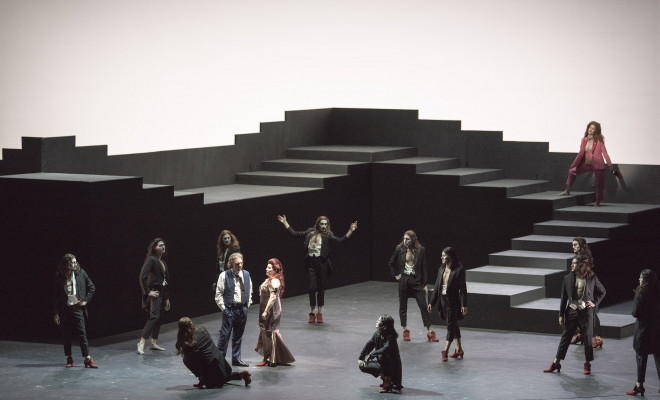
(© Prensa Teatro Colon / Arnaldo Colombaroli)
10/11/2019
Sébastien Vacelet
Link to complete french review and photos :
ORLYIX.COM
TEM Choir shines at Music and Beyond Festival, Ottawa
Two very different headliner vocal concerts marked the first weekend of Music and Beyond 2019.
On Saturday evening at Dominion-Chalmers, Daniel Taylor and his Toronto-based Theatre of Early Music performed Handel’s Dixit Dominus,
along with an assortment of Handel opera and oratorio arias and duets.
......Daniel Taylor conducted Handel’ Dixit Dominus with his own hand-picked vocal and instrumental ensemble from Toronto.(The Theatre of early Music)
The Dixit is such a dramatic, striking work that it’s easy for conductors to exploit extremes of dynamic range and tempo.
Taylor’s version had nobility and plenty of vigour, but stayed well within the bounds of sane execution.
The choir was undoubtedly the star: fresh, precise in its attack, with a rich, vibrant, present sound that belied its small numbers.
Three excerpts from The Ways of Zion do Mourn, Handel’s doleful anthem on the death of Queen Caroline of England, left one wanting more.
Among the soloists, the superb young baritone Geoff Sirett stood out with his voice of solid oak.
Link for article by NATASHA GAUTHIER of Artsfile :
Artsfile
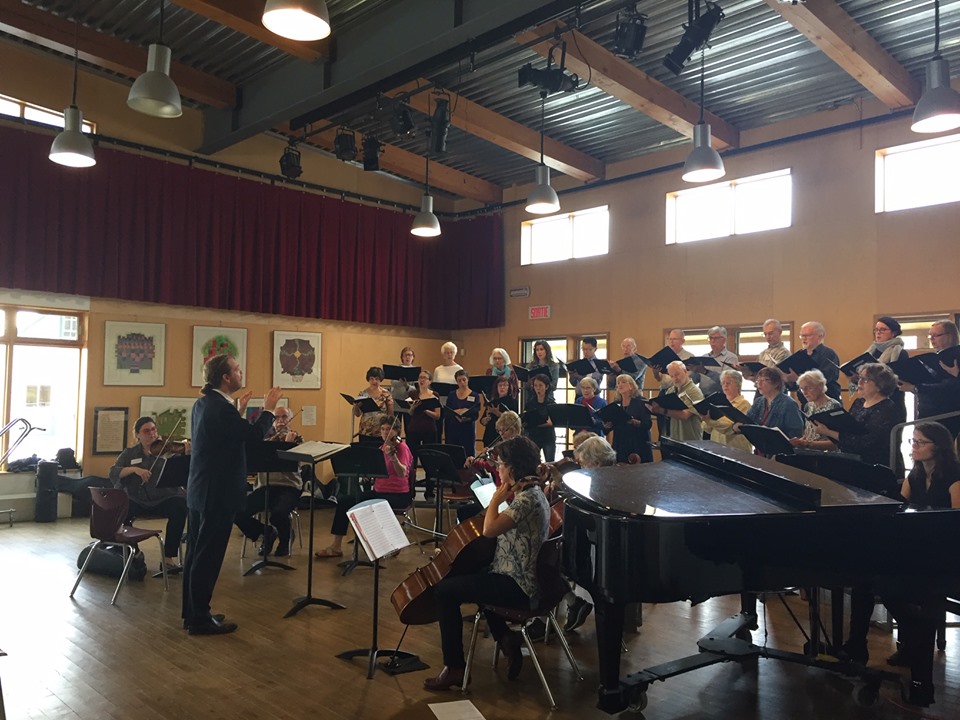
A great musical weekend with Daniel Taylor,
conducting our choir and instrumentalists at CAMMAC Bach weekend
Daniel Taylor tours West Africa with the Governor General of Canada
Our Artistic Director on tour across Western Africa. Many more details of this extraordinary time to come!

At the invitation of Her Excellency the Right Honourable Julie Payette, Governor General of Canada, Daniel and Ellen McAteer joined the delegation in undertaking
State visits to West Africa from October 23 to 30, 2018.
They visited :
Burkina Faso from October 23 to 26;
the Republic of Côte d’Ivoire from October 26 to 28;
and the Federal Republic of Nigeria from October 28 to 30.
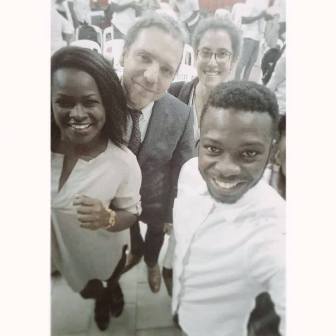
Ellen and Daniel after a Côte d’Ivoire masterclass.
Parliamentarians and Canadian leaders from the fields of education, research, innovation, development, trade and arts enhanced relations
with their African counterparts.
Daniel Taylor, our Artistic Director and Head of Historical Performance at the University of Toronto, joined the delegation.
These exchanges will strengthen Canada’s relationship with Burkina Faso, the Republic of Côte d’Ivoire, and the Federal Republic of Nigeria.
Link for information :
Governor General of Canada Official Site
Link to video of Daniel Taylor and Ellen McAteer in West Africa :
Daniel and Ellen McAteer in West Africa :
Opera Atelier Debut, October/November 2018
The Choir of the Theatre of Early Music and the University of Toronto Schola Cantorum under the direction of Daniel Taylor made their debut
as the Chorus of the Opera Atelier in Marshall Pynkoski’s beautiful production of Actéon and Pygmalion.
David Fallis conducts the Tafelmusik Orchestra and a starry lineup of soloists!
"The University of Toronto’s Schola Cantorum joined by members of the Choir of the Theatre of Early Music,
all under the direction of Daniel Taylor, send the music heavenwards."
For Complete Review :
Operagoing Toronto
Daniel Taylor writes from Africa:
"Congratulations to the Choir of the Theatre of Early Music and members of the University of Toronto Schola Cantorum for
scoring tremendous reviews for their debut appearance with Opera Atelier:"
"Excellent"(Toronto Star) - "Thrilling"(Schmopera)!
Link for tickets or information :
Opera Atelier
Glowing Dixit Dominus Review
.....Concluding its fourth annual Fall Baroque Academy, an eventful 3-day program of lectures, workshops and master classes for advanced students,
the University of Toronto Faculty of Music thrilled a capacity audience last Sunday with a stirring performance of Handel’s seminal masterwork.
Ringing and impassioned, a double choir and orchestra of students supplemented by an impactful cohort of seasoned soloists,
choristers and players filled Trinity College Chapel with musical magic.
An eclectic selection of popular art songs and arias spanning the mid 20th century to the Baroque all dedicated to special guest,
noted U of T musicologist Professor Emerita Mary Ann Parker, adorned the first half of the program.
Unexpectedly stepping from the wings, Head of Early Music Historic Performance, charismatic countertenor Daniel Taylor partnered by
Quebec soprano sensation Karina Gauvin contributed a delightful unscheduled piece - Handel’s delicious Scherzano sul tuo volto
- Your face abounds with grace and charm from the 18th century London-based maestro’s early Italian-flavoured hit,
Rinaldo. Trippingly played by a 15-member period orchestra, a goodly number of players strikingly familiar from both
Tafelmusik and Theatre of Early Music gatherings, the endearing little love duet led by violinist Jeanne Lamon quite
simply sparkled, setting the stage for a sequence of similarly stellar visitor appearances prior to the main event...
And then, filing into the handsome neo-Gothic nave - the 44 choristers of Dixit Dominus.
Commandingly led by Taylor, choir and ensemble excelled, launching the first of nine discrete movements,
Dixit Dominus Domine meo, with thoroughly arresting crispness and crunch.
Part II, an extended solo for alto, Virgam virtutis, provided marked contrast, sung with great poise and tranquility by
Szabó making an engaging return appearance. Handel’s gorgeous anthem for lyric soprano,
Tecum principum, brilliantly written in catchy triplets, brought Karina Gauvin gloriously front and centre again.
Parts IV and V propelled us to a place of profound certitude, affecting and uplifting, choir and orchestra united and assertive.
The Lord has sworn an oath and will not repent it. Punctuated by a flurry of brief, vibrant solos courtesy Schola Cantorum
sopranos Lindsay McIntyre and Sinéad White, mezzo Camille Rogers and guest tenor Asitha Tennekoon, Dominus a
dextris tuis unleashed its crescendo of righteous fervour, bass-baritone Matthew Li imparting a particularly emphatic note of exclamation.
Heathens duly dispatched in a stunning volley of sharp arpeggios and chords in Part VII,
chorus driving and explosive. Student sopranos Kayla Ruiz and White gifted us with a shining,
silvery rendition of, De torrente, a heartrendingly beautiful duet as moving as it is mysterious.
.....Transported to the more familiar sacred geography of the Gloria, the performance soared to its conclusion on repeated
upsweeps of harmony, singers and players charged with energy, the chapel filled with gladness.
Understatement was never George Frideric’s style. But drama and excitement most certainly was as Taylor and company made abundantly clear.
Ian Ritchie
Operagoing Toronto
For Complete Review :
Operagoing Toronto
The Countertenor Madness Concert
Concert will hit all the high notes
Friday, October 5, 2018 at 7:30pm
Kingston Road United Church
975 Kingston Road, Toronto, ON M4E 1T1
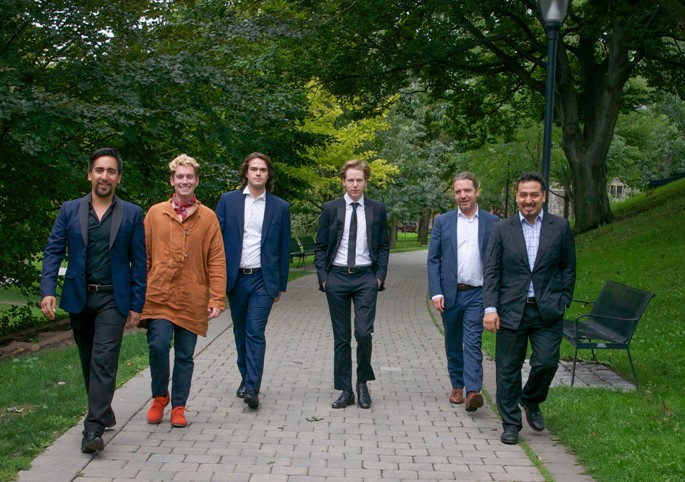
From left to right: César Aguilar, Ryan McDonald, Ian Sabourin, Benjamin Shaw, Daniel Taylor and Miguel Brito
will perform at Countertenor Madness on Oct. 5. PHOTO: Karen E. Reeves
Countertenor (Noun) "of or being the highest male voice; having a range above that of the tenor."
Ever heard one? If not, now is your chance. The Kingston Road Village Concert Series (KRVCS) will kick off its 2018-19 concert series with a bang.
The Countertenor Madness concert on Friday, October 5 at 7:30 p.m. will showcase five countertenors in a one-of-a-kind extravaganza.
It is rare enough to have one countertenor roaming around, but it is almost unheard of to have five in the same concert.
This is possibly one of the only times you will hear such a unique event.
Local businesswoman Mary Gore (in partnership with her husband Bob of Robert Gore and Associates) has raised
the funds necessary to bring these artists to our community, even flying tenor Jesús Cortés from Mexico for the concert.
Toronto Symphony Orchestra bassist and KRVCS Music Director Tim Dawson dreamed up this unusual event, bringing together world-renowned countertenor Daniel Taylor with four of his countertenor pupils:
César Aguilar, Benjamin Shaw, Ian Sabourin and Ryan McDonald.
The concert will feature a varied program. You’ll hear some standard countertenor repertoire and a few more modern works.
All of these singers are currently pursuing graduate or postgraduate degrees at the University of Toronto.
They have been recognized for their beautiful voices across Canada and around the world.
"This concert marks the first time that they have all performed together" said Mary.
"Two special guests will also be appearing as part of this wonderful evening.
Mexican musicians pianist Miguel Brito and tenor Jesús Cortés will present an homage to Mexico along with César Aguilar,
as part of the concert."
You will not want to miss this evening of glorious music.
Tickets are $25 at the door or through :
Eventbrite.com
Beach Metro News Sept 19th 2018
HTTP://WWW.BEACHMETRO.COM/2018/09/19/CONCERT-WILL-HIT-ALL-THE-HIGH-NOTES-OCT-5/
2018 Music and Beyond Opening Gala review.
Daniel Taylor’s Theatre of Early Music performed a patrician, semi-staged version of Purcell’s Dido and Aeneas.
Ottawa mezzo-soprano Wallis Giunta was the star attraction as Dido. Taylor wisely underlined her singular energy and vocal distinctiveness:
dressing her in creamy white while keeping everyone else in black; isolating her onstage, minimizing her physical interactions with
the other singers. Instead, two contemporary dancers, the riveting Bill Coleman and Carol Prieur, served as the physical avatars for passion,
sensuality and betrayal. It was really the only approach that allowed this strange marriage to work.
Geoffrey Sirett was an enormously impressive Aeneas. Sirett adopts a less is more philosophy. His velvety, tea-stained baritone is grounded
in luxurious legato and judicious use of falsetto for expressive effect.
The rest of the ensemble was marvellous, including Larissa Koniuk’s sweetly affecting Belinda,
Benjamin Butterfield’s hilariously inappropriate drunken sailor, and Taylor’s own creepy, campy Sorcerer.
Choral movements were finely etched, with especially beautiful echo effects. The small instrumental ensemble,
led by violinist Adrian Butterfield, provided a softly shimmering backdrop for the singers.
NATASHA GAUTHIER
July 5th 2018
For Complete Review :
artsfile.ca
Daniel Taylor: chant choral... sur le chemin du paradis
Daniel Taylor: choral singing ... on the way to paradise
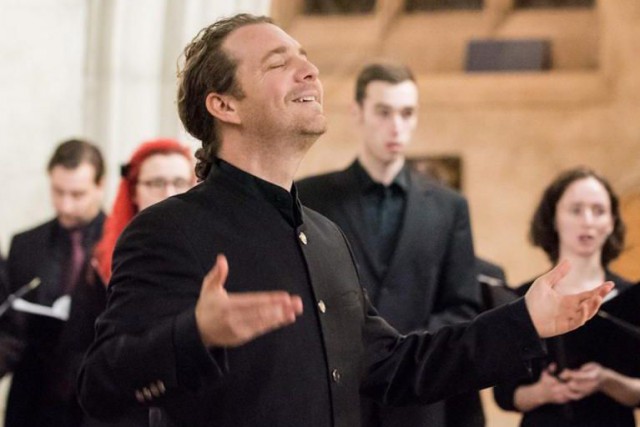
Published February 25th 2018
ALAIN BRUNET La Presse
If so many music lovers in Quebec and Canada appreciate the range of the countertenor, it is largely thanks to Daniel Taylor.
Suave and incarnate, his high-pitched voice has bewitched us for more than two decades, and also through over one hundred albums.
In addition to being a rigorous and respected choral conductor, inspired artistic director and true aesthetic leader,
the Canadian singer is at the helm of the Trinity Choir and the choir and orchestra of the Theater of Early Music (TEM).
The approaches of these formations consist in amalgamating the most beautiful choral works of the XVth century to today,
works often forgotten and put back in light ... this time in Montreal, where he lived for two decades and where he keeps a
pied-à-terre - he now teaches at the University of Toronto, where he lives mainly to honor this task.
The program of his Sunday performance is based largely on the much appreciated material of an album launched last December
by the Trinity Choir on the Sony Classical label, the sublime "The Path to Paradise" welding the present and the
distant past.
The chapel of Notre-Dame-de-Bon-Secours will be inhabited by composers Arvo Pärt (1935-), John Tavener (1944-2013),
John Sheppard (1515-1558) and Willam Byrd (1540-1623), among others. For Daniel Taylor and his colleagues,
this superimposition of epochs works perfectly well, although it begins with a musical quest in the fifteenth, sixteenth
and seventeenth centuries.
"This relationship with the music of the distant past, says Daniel Taylor at the end of the telephone line, comes from the
influence exerted on me by the late Christopher Jackson [founder and artistic director of the Studio de musique ancienne de
Montréal]. I knew him in my first year of university, we became friends, then traveled a lot together. In addition to being
a great musician and a great artistic director, Christopher was a man of exceptional depth, with whom we could discuss
everything: news, history, philosophy, etc. "
This relationship of Daniel Taylor with the late Christopher Jackson has also encouraged him to integrate humanity into
his artistic practice.
"What I’m looking for in the choral repertoire and in the music highlighted by the ensembles I’m associated with is
the human factor. Very old or very recent, the song can illustrate the persecution and the suffering, but also hope and
revelation. " says Daniel Taylor. This is why, moreover, he regularly includes in his concerts the music of
contemporary composers such as John Tavener and Arvo Pärt, whose rhythmic concepts are inextricably linked to the heartbeat.
Tavener and Pärt prove to be true mystics in the 21st century, and their work may well merge with a body of ancient music
whose inspiration was often (if not exclusively) religious.
But there is even more: "So many great thinkers and art designers are interested in rituals, " says Daniel Taylor.
"As far as I’m concerned, it’s really not easy to talk about this ritual dimension in a 60-minute album or in a concert,
but it’s still possible, I think. "
Research Work
The great qualities of Daniel Taylor’s concerts or recordings lie in the rigor of his quest for works that are both sublime
and obscure.
"I dig into bookstores or libraries, the list of my discoveries grows over the years, " he says. Let’s take In
Monte Oliveti, from Orlando di Lassus [1532-1594]. I had never heard this beautiful piece before discovering it in the library.
I also visited the Mount of Olives in Israel. Arriving on the spot, however, it is not so grandiose ... In the case of this
mystical representation, the journey is more important than the arrival. "
Very often on tour, the singer and artistic director likes to lead ensembles whose members can vary around a stable core of
collaborators.
"I like that the interpreters, recruited mainly in Canada, remain fresh and alert while being part of the same sound
aesthetic. If we perform abroad, however, we can accommodate a number of singers from countries where we perform. ""
The sound bill is essential for Daniel Taylor. "For The Path to Paradise concept, for example, I recruited tenors who
sing particularly high, which gives the choir an overall sound consistent with what the 16th century composers in our
repertoire had in mind. This is why, moreover, we find in this choir more male voices than usual. The sopranos also play a
leading role in the choir and add to the seduction. I dare to believe that we are able to suggest a real experience and
touch people."
http://www.lapresse.ca/arts/musique/entrevues/201802/25/01-5155203-daniel-taylor-chant-choral-sur-le-chemin-du-paradis.php
March 1, 2018 : A touching reflection on last Sunday’s The Path to Paradise:
Quand je m’évade dans la mesure (When I escape into the measures.) :
personal notes and musical review by Josée Gagnon:
High sensitivity. Clarity of the vocal gesture. We hear the space that opens.
Joyful acuity flows through the senses. We perceive everything, sounds and silences. The mind
calms down. The posture changes. In this quality of listening, each voice is revealed
in it’s infinite accuracy. Each delivering it’s own color, essential to balance the whole. The ear captures the muffled sounds that soon give way to the storm of a
flamboyant crescendo. The sound volume penetrates us without ever crushing. It
envelopes us, it keeps us alert. As an arrival at the summit, at the end of a
long ascent, when the heart breathes and soothes, absorbed by the expanse of emptiness,
dazzled by the beauty of space, as far as the eye can see, with a full ear.
The choir director inspires this creative synergy. He invites it through his gestures. he
feeds on it and provokes it all at once. He leads the voices and our listening in a movement of perfection. It reveals the fair expression of the work at this time,
in this room, with this audience. In this atmospheric pressure and this humidity
from the end of February, it offers the perfect texture for this exceptional acoustic space. In
the pure magic of this meeting, each member of the audience becomes an accomplice of
the works that are being created that night. In the wave of sound and listening, emotions
dance, all personal, intimate but connected just as much.
Sitting straight on my wooden pew in the heart of the church, I loose myself in the movements of the conductor, Daniel Taylor. I observe this back and those hands that chant the
movement. I follow them for a long time. It's calm, precise, whole. I
escape into the measures. I enter the score. I navigate in the wave of
voices that release their arsenal of grandeur and beauty.
And the last piece ends. The encores are finished. The voices touch the silence. The
musicians are turning. Greetings. Applause. The audience is rising. Ritual. Transition.
It moves, it speaks. Each one of them put on the mantle of his life and returns step by step to
the city. Sunday night in Montreal. The city with a hundred steeples. The city of
a thousand festivals. :
I am coming back home. I write these lines. As a need to convey how art is alive.
How art transforms and animates women, men and children who experience, create, feel and welcome it.
And because art exists, maybe humanity has still a chance?
These notes were written after Daniel’s THE PATH TO PARADISE presentation.
Taylor and the Theater of Early Music, presented at Notre-Dame-de-Bon-Secours Chapel,
in Old Montreal, February 25, 2018, as part of the Montreal Highlights Festival.
 Top
Top